
Landcare
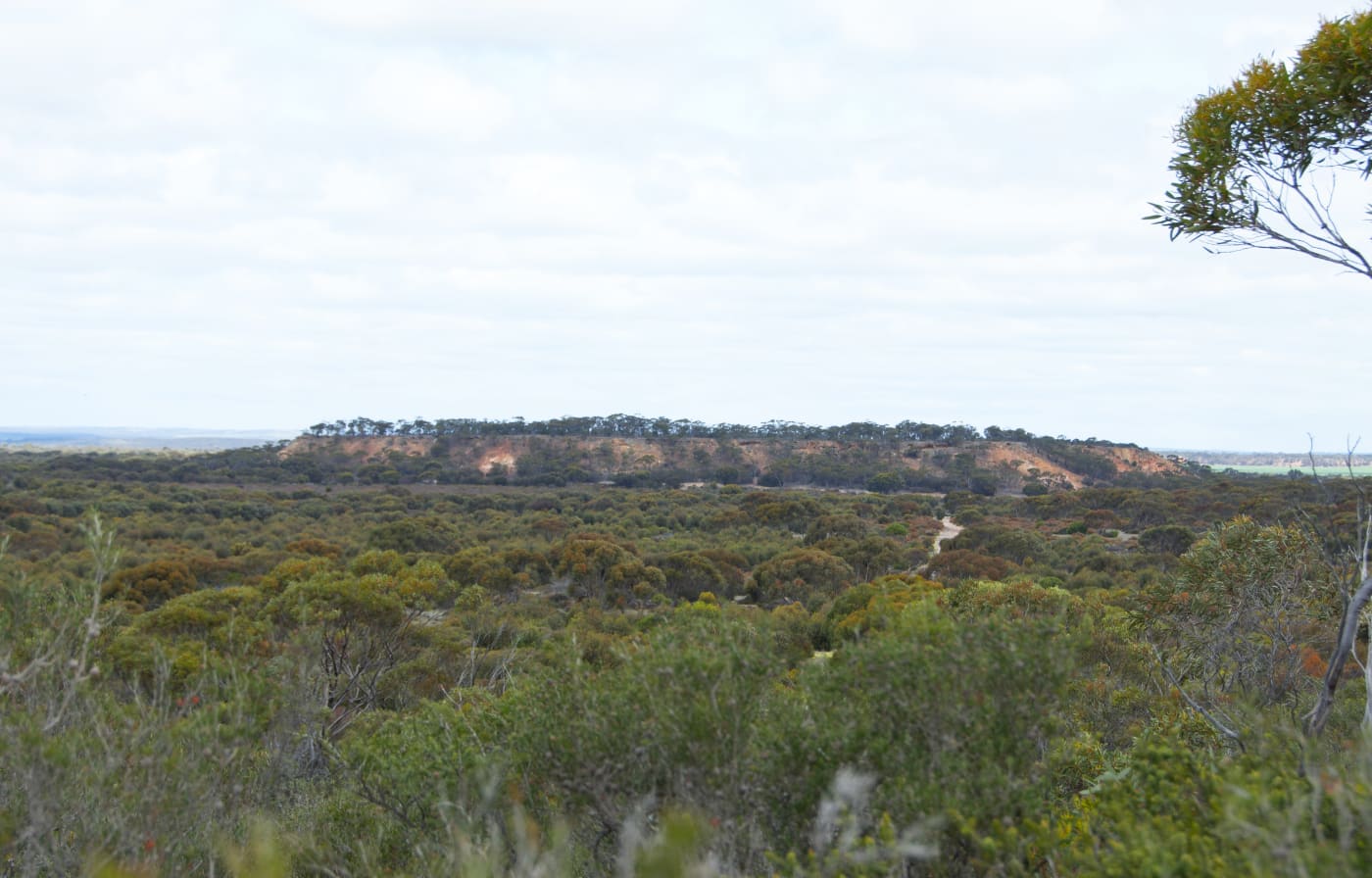
At the time of purchase, native vegetation occurred on the breakaway mesas and in the north-eastern portion of the property (see figure below). Although much of the plain country in this section was cleared and burnt for farming many years earlier, it was never cropped or grazed and the native vegetation had largely regrown by 2004.
The removal of stock from the south-west farmland portion in 2004 enabled native seed stored in the soil to germinate and re-establish natural grasslands; larger farmland areas needed restoration works.
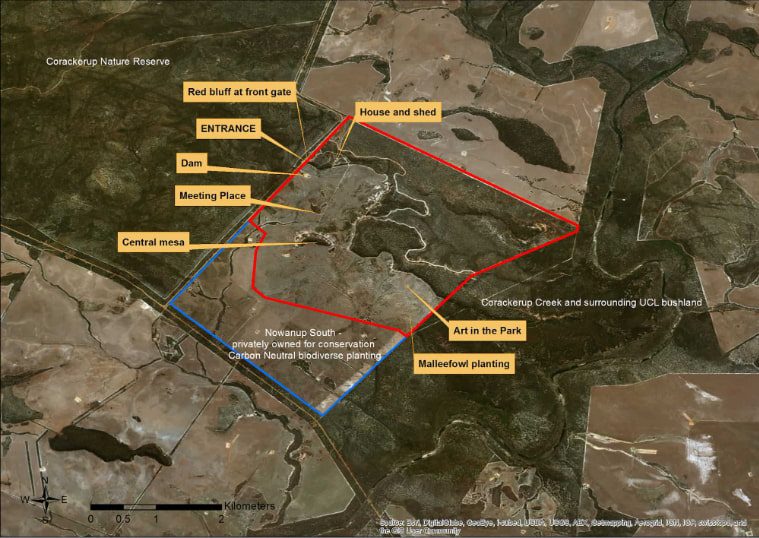
Direct seeding to infill existing plantings was undertaken by GAWA in 2017-2018. Planting of bush food species and other plantings are ongoing. A more detailed history of landcare on Nowanup, including the range of revegetation techniques, is available here. The following photo gallery shows the remarkable transformation of cleared land on Nowanup between 2006-2022:

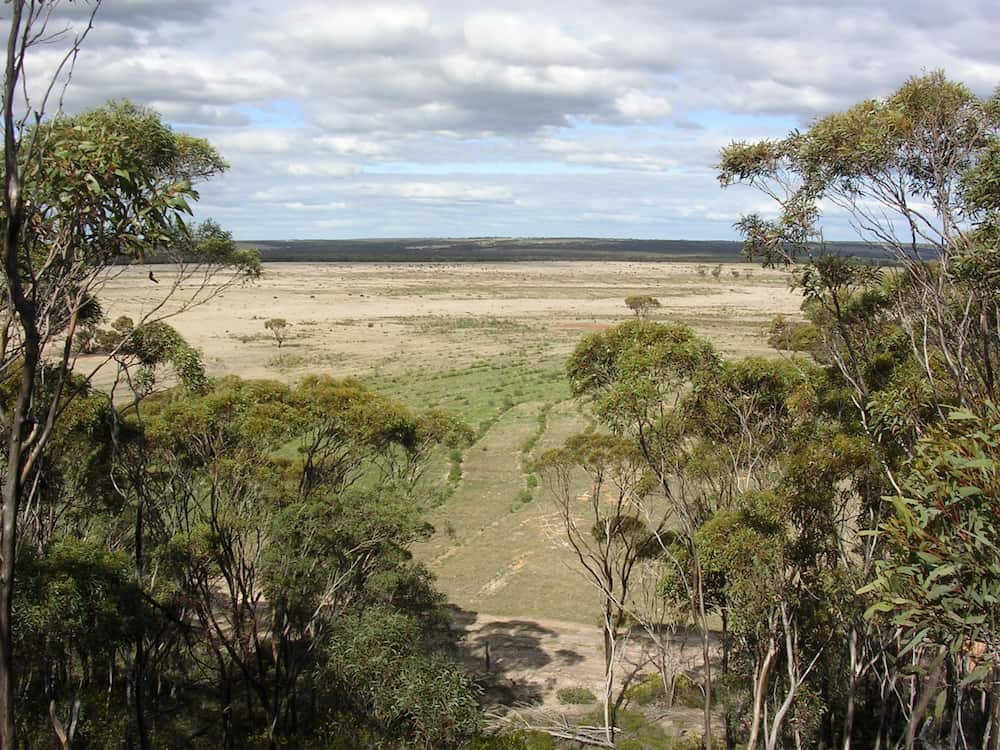
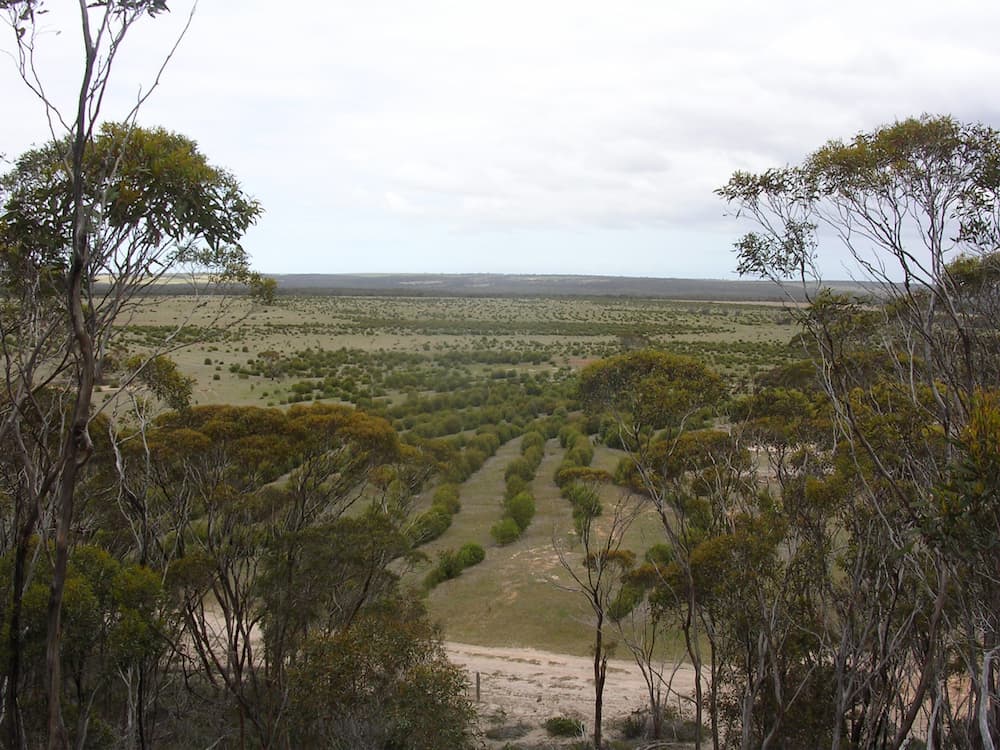
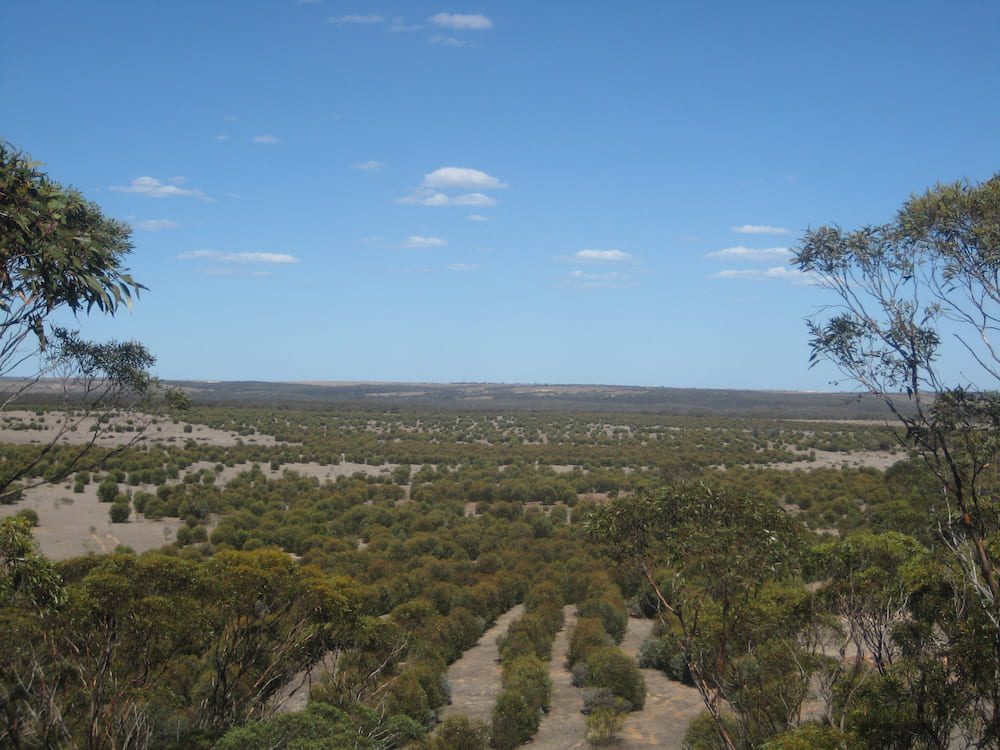
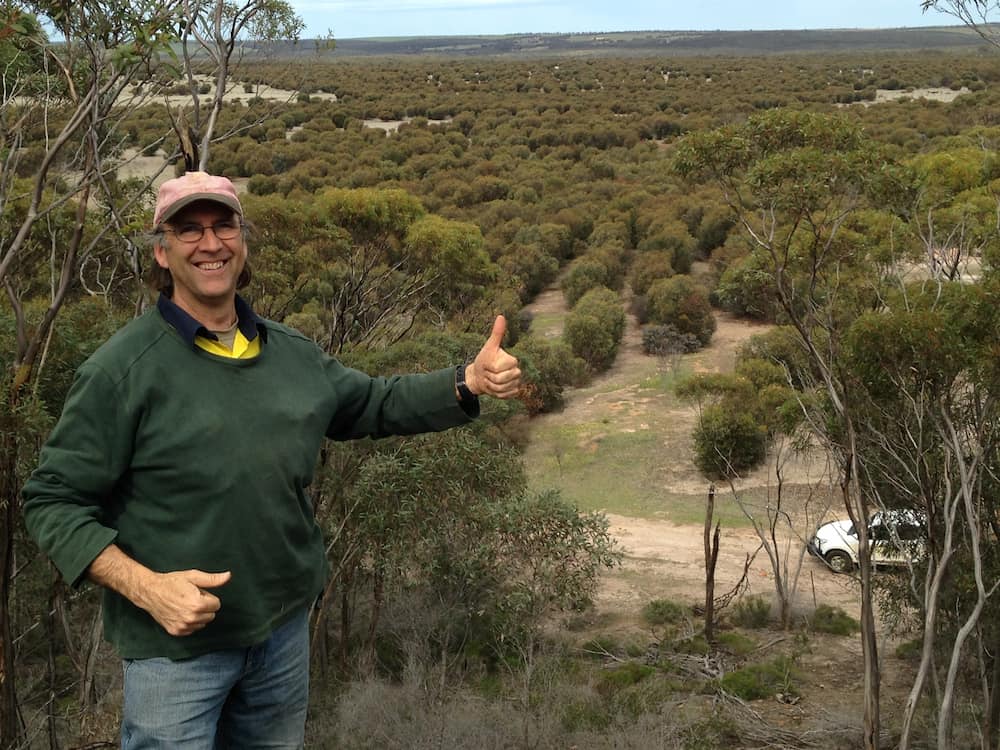
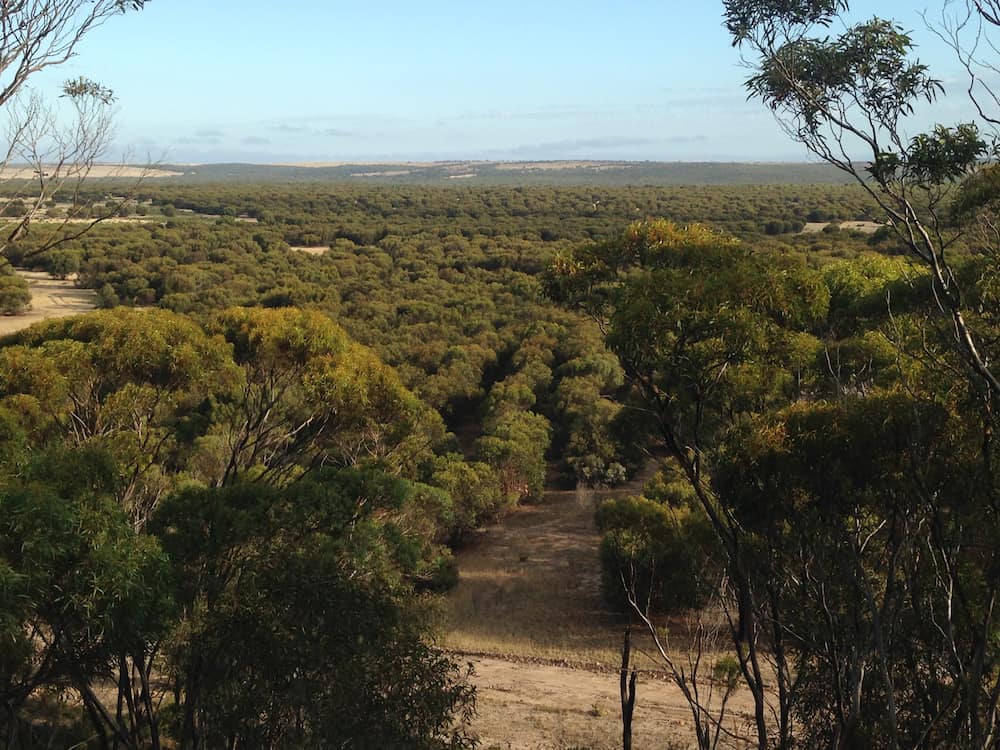
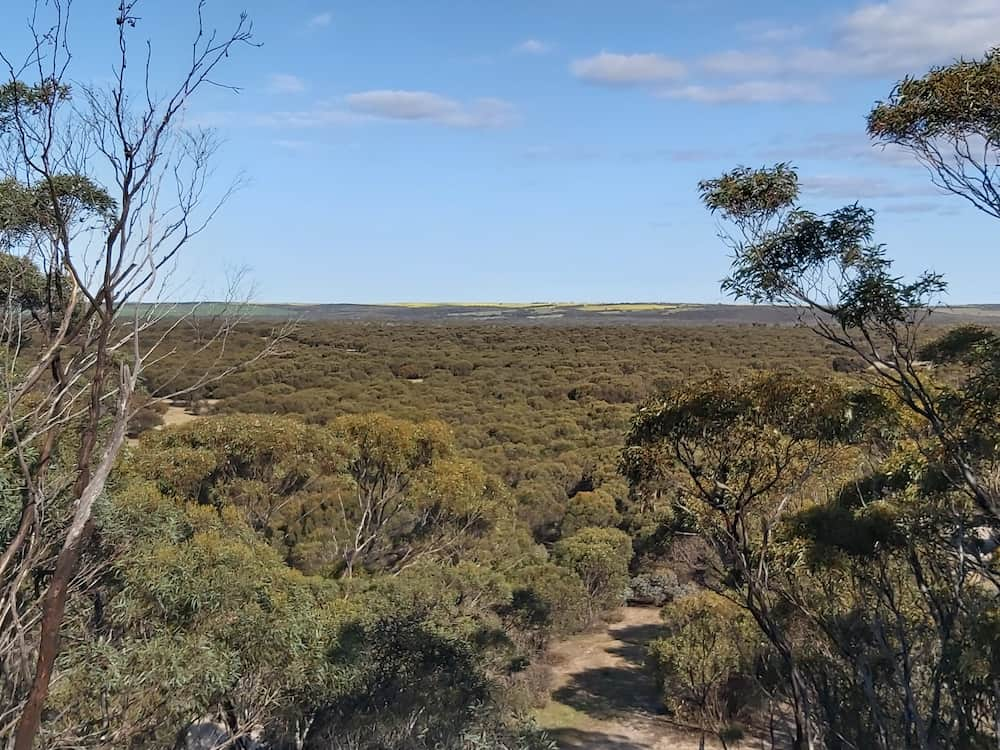
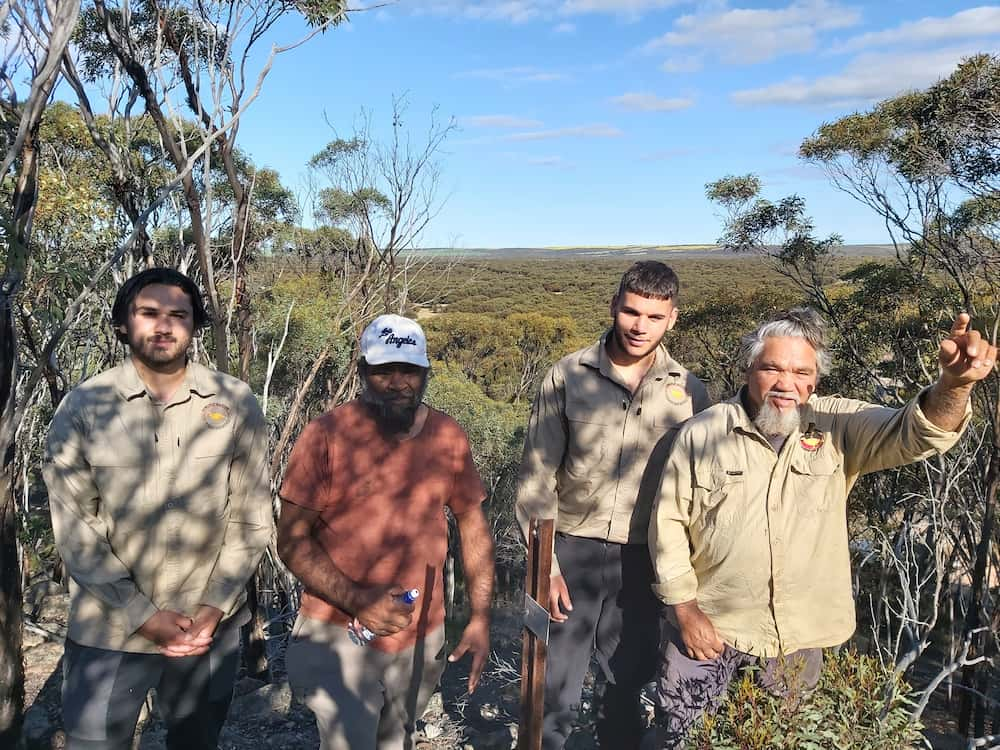
Since 2006, under the stewardship of Goreng Noongar leader Eugene Eades and Goreng Elders, all the activity taking place at Nowanup has been an expression of Healing Country—Healing People.
Nowanup Caretakers (Rangers)
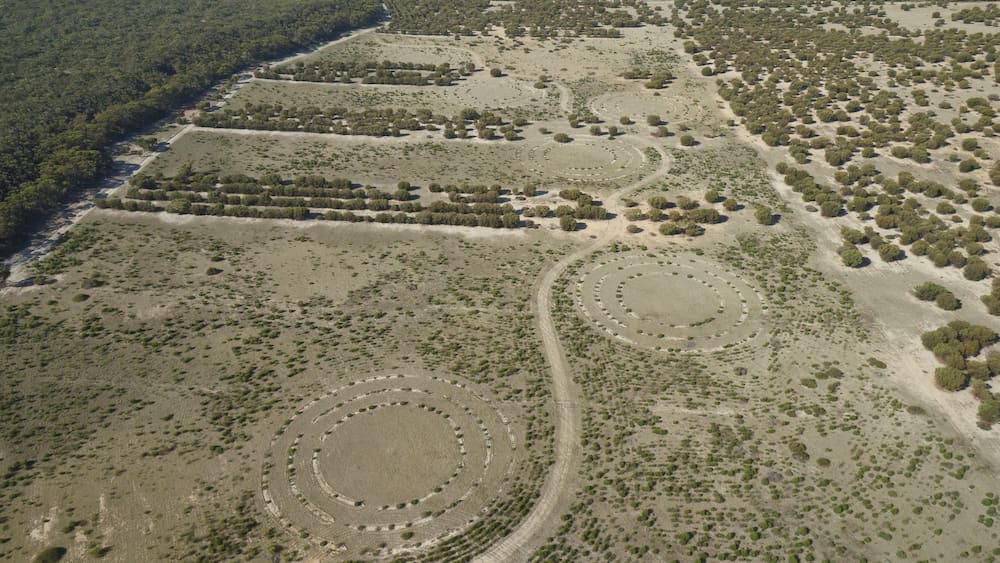
The Nowanup Ranger team, formed in 2015, has played an important landcare role on Nowanup, including seed collecting and hand-planting seedlings for revegetation and two eco-cultural restoration initiatives — the Six Seasons Circles and a giant Malleefowl totem.
More information about the Nowanup Ranger team is available here.
Thousands of seedlings were also planted by four Noongar boys undertaking an eight-week justice diversion program under the care of Uncle Eugene Eades.
RECONNECTING THE FITZGERALD RIVER AND STIRLING RANGE NATIONAL PARKS
Nowanup is located in a part of the Gondwana Link known as the Fitz-Stirling. As the name suggests, this area spans the country between the Fitzgerald River and Stirling Range National Parks (see map)link to top of page.
A range of groups and individuals are working to re-establish a strong, bio-physical connection between these two national parks by protecting existing habitat and restoring habitat on cleared land.
Nowanup’s bush and revegetated land is a vital part of achieving that reconnection. In particular, it fills a significant habitat gap between the Corackerup Nature Reserve and the Crown lands along the Corackerup Creek.
PLANS FOR THE FUTURE
There is much enthusiasm at Nowanup for the creation of a Nowanup Healthy Country Plan, but no funding is available at this stage.
The plan would incorporate cultural and nature conservation goals and draw on all the experience and knowledge that Noongar Goreng and non-Indigenous people hold after more than 18 years of getting to know the place deeply.
Additionally, there is the knowledge held by Elders who knew the area well before it was cleared for farming and speak of its cultural significance.
Nowanup’s landforms, native vegetation types and fauna species
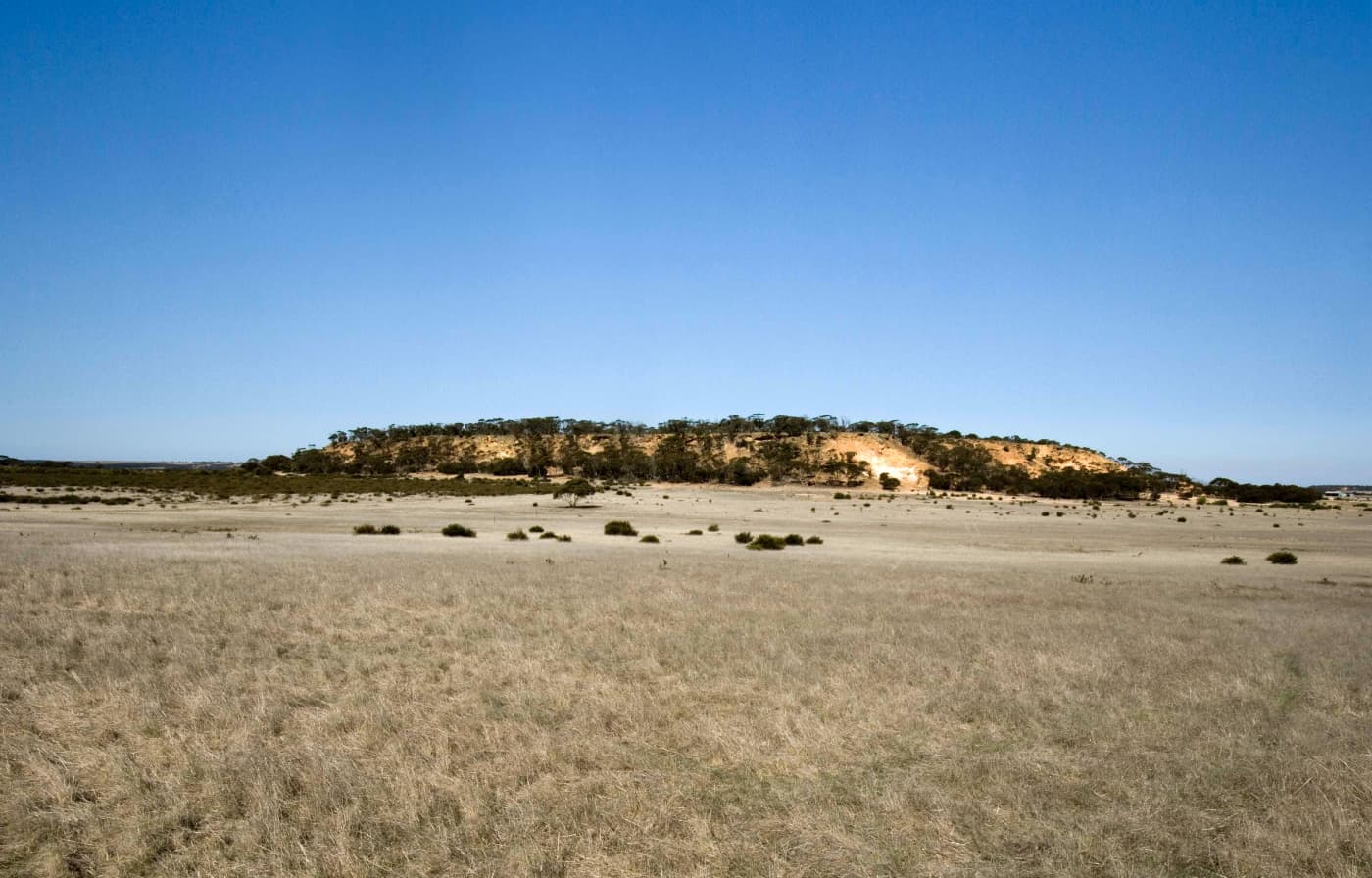
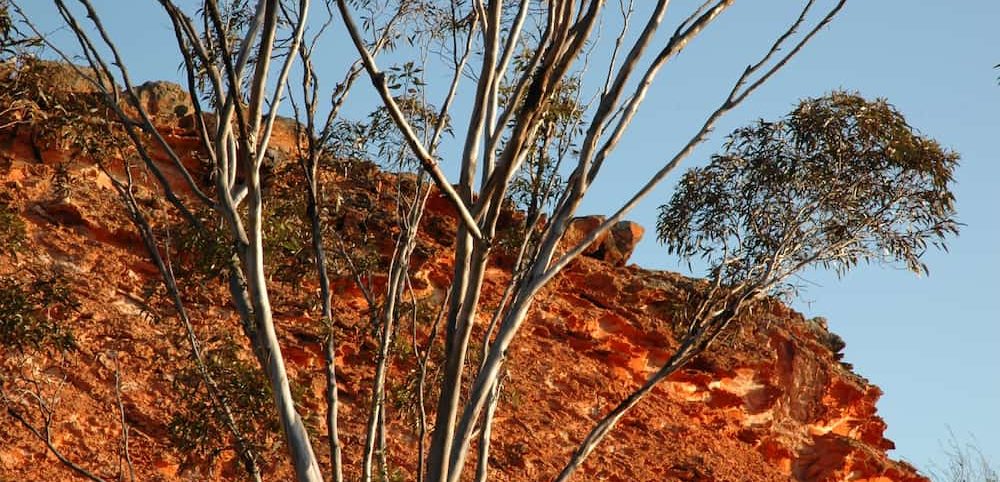
The red spongolite cliffs along Nowanup’s mesa country were formed from sediments of marine sponges and clay silt when the shallow Eocene sea covered the area around 40-45 million years ago.
The plain country, which stretches away from the mesas, has had its covering layer of spongelite eroded away by wind and water over millions of years.
This craton is a massive 3.6-billion-year-old geological plate that underlies much of south-western Australia.
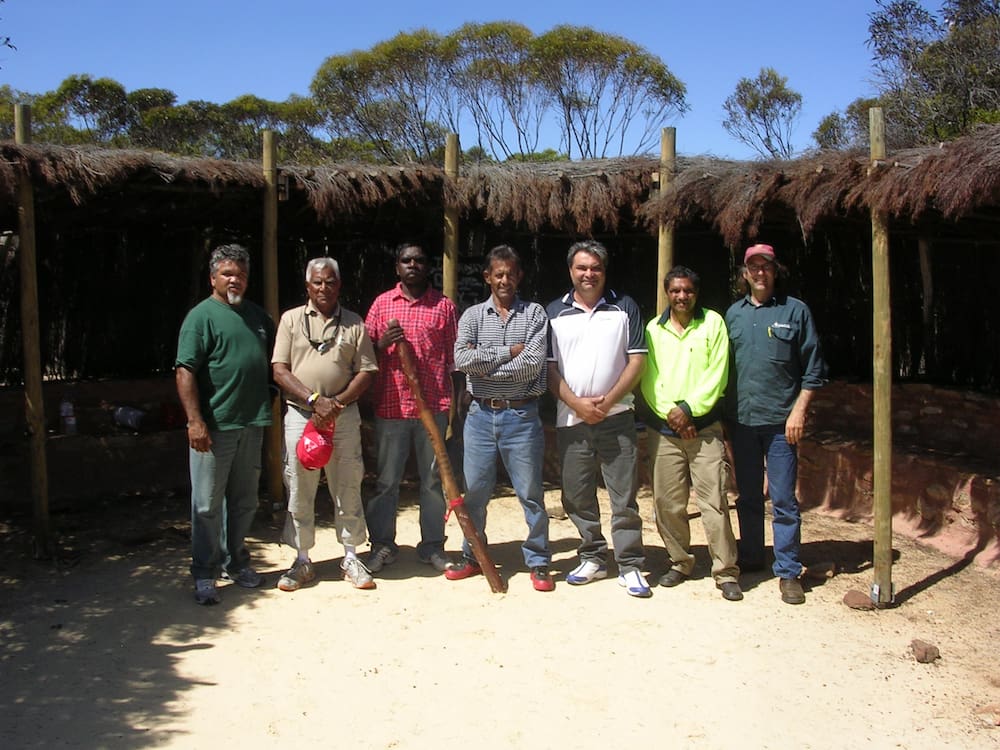
Nowanup’s Meeting Place is located south-west of the main mesa at the base of a knoll with red clay soils. This outcrop is an exposure of the underlying granite and gneiss rocks, with the spongelite layer eroded away.
Significant populations of the locally endemic eucalypts Corackerup moort (Eucalyptus vesiculosa) and Corackerup mallet (E. melanophitra) are found on Nowanup.
Some of the most commonly seen fauna on Nowanup are:
- the karda (Varanus rosenbergi),
- malleefowl,
- emu,
- western grey kangaroo,
- wedge-tailed eagle and
- owlet night-jar.
Less common species include the:
- tammar wallaby,
- black-gloved wallaby,
- western whipbird,
- shy groundwren, and
- crested bellbird.
Join the Friends of Nowanup Mailing List
ACKNOWLEDGEMENTS
Much of Nowanup’s on-ground revegetation work since 2004 has been co-ordinated by Barry Heydenrych of Greening Australia. With thanks to Barry, Glen Steven and the Greening Australia team for their years of dedicated work to help restore Nowanup to healthy country.
The early Greening Australia team included:
- Nathan McQuoid
- Nigel Metz
- Chris Robinson
- Geoff Woodall and
- Ben Boxhall.
- The Reconnections program, funded by Shell Australia,
- The Commonwealth Government’s Biodiversity Fund and
20 Million Trees Programme. - Gondwana Link Ltd and
- Greening Australia provides support as needed.
FURTHER READING
Ecological Management & Restoration journal article:
Nowanup: Healing country, healing people
In 2005, Nowanup was part of a Functional Landscape Plan (also known as a Conservation Action Plan) developed for the Fitz-Stirling section of the Gondwana Link. The plan’s activities support the reconnection of the Stirling Range and Fitzgerald River National Parks. The plan was revised in 2013 but is no longer in active use. However, it is a useful reference document.